Pixels - Seamless Geometric Patterns: A Practical Guide to Integration in Digital Workflows
In the landscape of digital design, visual consistency is not merely an aesthetic choice; it is a functional requirement. Whether you are building a brand identity, developing a user interface, or creating educational materials, the background and texture layers often dictate the perceived quality of the final product. This is where Pixels - Seamless Geometric Patterns becomes a critical asset. These assets are not just decorative images; they are foundational elements that support structure, readability, and visual hierarchy.
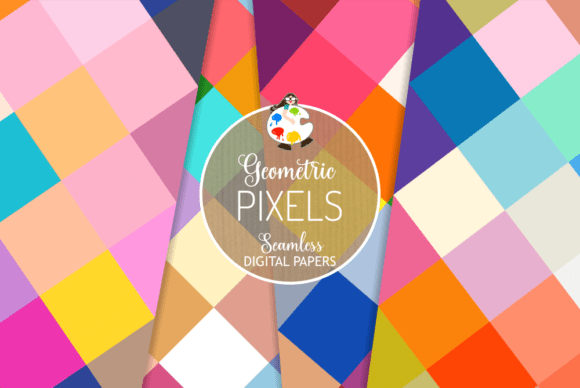
The specific collection known as Pixels - SEAMLESS DIGITAL PAPERS offers a distinct advantage for professionals who value precision and efficiency. Comprising four unique geometric checked pixel patterns created in a simple flat graphic style, this set bridges the gap between retro nostalgia and modern minimalist utility. For creators, entrepreneurs, and marketers, understanding how to integrate these seamless tiles into their workflow can significantly reduce production time while enhancing the professional polish of deliverables.
Understanding the Asset: Structure and Specifications
Before integrating any digital asset into a project, it is essential to understand its technical specifications and inherent properties. The Pixels - Seamless Geometric Patterns set consists of four distinct JPG files, each rendered at 300dpi with a resolution of 4096 by 4096 pixels. These specifications are not arbitrary; they are designed to meet the rigorous demands of high-resolution printing and scalable web design.
The term "seamless" is the most critical attribute here. In practical terms, a seamless pattern means that the edges of the image align perfectly when tiled. There are no visible breaks, lines, or distortions where one tile meets another. This allows designers to fill large areas—such as website backgrounds, presentation slides, or printed brochures—with the pattern without worrying about awkward cropping or repetitive artifacts. For a freelancer managing multiple client projects, this feature eliminates the need for manual editing to hide seams, saving valuable hours during the execution phase.
The visual style of these patterns is described as geometric, mosaic, pixelated, retro, flat, minimalist, and checkered. This combination of descriptors points to a versatile aesthetic. The flat and minimalist nature ensures that the patterns do not compete with foreground content, such as text or primary graphics. Instead, they provide a subtle texture that adds depth and interest without causing visual clutter. This is particularly important for educators and bloggers who need to maintain reader focus on the core message while still providing an engaging visual environment.
Strategic Implementation Across Different Workflows
The utility of Pixels - Seamless Geometric Patterns extends across various stages of a creative or business workflow. Rather than viewing them solely as end-product decorations, consider how they can function as tools for planning, branding, and organization.
Brand Identity and Consistency
For small business owners and marketers, establishing a cohesive brand identity is paramount. One of the challenges in brand management is maintaining visual consistency across diverse platforms, from social media avatars to large-format print advertisements. By incorporating a consistent geometric pixel pattern into your brand guidelines, you create a recognizable visual thread.
Because the patterns are available in high-resolution JPG format, they can be used effectively in both digital and physical mediums. A logo designer might use one of the four patterns as a secondary element in business cards or packaging inserts. The 300dpi resolution ensures that when the file is sent to a printer, the pixelated details remain crisp and intentional, rather than blurry or muddy. This attention to detail signals professionalism and care to the end consumer.
User Interface and Experience (UI/UX) Design
In the realm of web design and app development, background textures play a subtle but powerful role in user experience. Flat design trends have moved away from heavy gradients and shadows toward clean, solid colors and simple textures. The minimalist nature of these pixel patterns makes them ideal for UI backgrounds.
Developers and UX designers can implement these patterns using CSS background-repeat properties. Since the images are completely seamless, they will tile infinitely across the viewport without performance issues related to loading large, non-repeating image files. This approach optimizes page load times, a key factor in SEO and user retention. Furthermore, the geometric checkered style can evoke a sense of structure and order, which can subconsciously reinforce the reliability of a fintech app or a productivity tool.
Content Creation and Publishing
Blogger and content creators often struggle with making digital content visually appealing without overwhelming the reader. Text-heavy articles can feel dry, while overly complex graphics can distract from the narrative. Pixels - Seamless Geometric Patterns offer a middle ground. They can be used as headers, footers, or sidebars in blog posts and newsletters.
Consider a scenario where a blogger is writing a series of tutorials. By assigning a different pattern from the set to each tutorial category, they create a visual taxonomy. Readers can instantly recognize the type of content based on the background texture. This organizational strategy improves usability and helps users navigate the site more efficiently. Additionally, for educators creating slide decks or handouts, these patterns provide a clean backdrop that enhances the legibility of charts and diagrams without introducing distracting noise.
Technical Considerations and Quality Control
When integrating Pixels - Seamless Geometric Patterns into your projects, several technical factors must be managed to ensure optimal results. The first consideration is color harmony. While the patterns are monochromatic or limited in palette, they must complement the primary color scheme of the project. Designers should test the patterns against their chosen typography and accent colors to ensure sufficient contrast and readability.
Another critical aspect is file management. With four unique images, it is easy to lose track of which pattern corresponds to which project or brand guideline. Implementing a structured naming convention is essential. For example, naming files as Pattern_Checkered_Blue_300dpi.jpg rather than image_final_v2.jpg saves time during retrieval and reduces errors. This practice is part of good digital hygiene and contributes to long-term efficiency.
Compatibility is also a key factor. As JPG files, these patterns are universally supported across all major design software, including Adobe Photoshop, Illustrator, Affinity Designer, and Canva. They can be easily dragged and dropped into layouts, resized, or overlaid with opacity adjustments to create custom effects. However, because they are raster images (JPG), they are not infinitely scalable like vector formats (SVG). While 4096x4096 pixels is a generous resolution, designers should be mindful of extreme enlargement beyond the original dimensions, which could introduce pixelation artifacts if not handled carefully.
Maximizing Value Through Repurposing
To get the most out of this asset set, consider repurposing the patterns across multiple touchpoints. A single purchase of Pixels - Seamless Geometric Patterns can yield significant value if applied strategically.
- Social Media Templates: Use the patterns as backgrounds for Instagram stories or LinkedIn banners. The geometric style fits well with modern, tech-forward aesthetics.
- Email Marketing: Incorporate thin strips of the pattern into email headers or footers to break up text blocks and add visual rhythm.
- Print Collateral: Utilize the high-resolution files for posters, flyers, or merchandise designs. The pixelated style lends itself well to screen printing and textile patterns.
- Digital Products: If you sell digital planners or templates, include these patterns as bonus wallpapers or background options for your customers.
By diversifying the application of these assets, you extend their lifecycle and increase the return on investment. This approach aligns with the principles of lean creativity, where resources are utilized fully and efficiently.
Conclusion: A Tool for Clarity and Structure
In a digital world saturated with noise, clarity is a premium commodity. Pixels - Seamless Geometric Patterns offer more than just decoration; they provide structural integrity to visual designs. Their seamless nature, high resolution, and minimalist aesthetic make them versatile tools for a wide range of professionals.
Whether you are a marketer crafting a campaign, a developer building a platform, or an educator designing a course, integrating these patterns can enhance the coherence and professionalism of your work. By understanding their technical specifications and strategic applications, you can seamlessly weave these assets into your workflow, resulting in outputs that are not only visually appealing but also functionally sound. The key lies in thoughtful integration, consistent application, and respect for the balance between texture and content.